Is Extinction Rebellion too white and middle-class?
- Emily Latimer
- Jul 7, 2021
- 7 min read
Updated: Aug 2, 2021

The elitist view of climate activism is not uncommon, with many like George Monbiot, from The Guardian, calling Extinction Rebellion: "too white, and too middle class.” But, does Extinction Rebellion (XR) have a race and class issue, and if so is this a problem?
Research funded by the Centre for the Understanding of Sustainable Prosperity found activists who took part in Extinction Rebellion’s major protests were overwhelmingly middle class, highly educated and southern.
The research also found that 85% of those who took part in the action in London in 2019 were educated to degree level. Although Extinction Rebellion activists were found to have a more diverse age profile than other environmental protests. So why is this?
Sue Hampton, a retired teacher and member of XR points out that education often comes with a level of wealth. She says: “There is no doubt that XR is not representative of the whole population, people are extremely clever with many from science backgrounds or with PHD’s; things that often come with privilege.”
Though Sue points out: “Whilst, there are a lot of white or middle-class people everybody is genuinely welcome.”
Another reason, for this middle-class bias, is likely to be Extinction Rebellion’s use of arrest and nonviolent civil disobedience-
Unlike many other movements that focus on traditional systems like petitions or writing to MPs, Extinction Rebellion encourages its members to take more risks such as getting arrested or doing jail time. Though on its website it does make clear: “We don’t want or need everyone to get arrested – for some this is not a good idea – but we do want everyone involved to support civil disobedience as a tool.”
However, a criminal record can be extremely costly and cause significant problems for many younger activists, especially people of colour. This contrasts with the relative risks posed to some activists whose job, lifestyle or privilege may allow them to deal with the consequences.

Ben Smoke, in The Guardian, criticised Extinction Rebellion’s tactic of mass arrest. He wrote: “For XR to casually speak of imprisonment undermines the negative experiences of incarceration on black, Asian and minority ethnic people in the UK.”
For this reason, it’s easy for minority groups to feel alienated by XR’s methods and by the movement, or as though they can’t get involved.
For example, Hannah Marie, 22, a student explains: “We already face issues with police brutality, mass incarceration and discrimination. Being black we have to face that daily, so there is a greater risk when protesting and getting involved with these movements can feel harder.”
Due to this, it’s easy to see why Extinction Rebellion may attract a ‘white middle-class crowd’ and Ami Gill, 23, a student tells me: “The lack of representation in my local area puts me off joining.”
Similarly, Mercy Ajisafe, a black 31-year-old host and actor, highlights that environmental action can feel like less of a priority due to the social injustices many people of colour face.
Mercy tells me: “Sometimes I feel very distant from the environmental conversation because even though it shouldn’t be, it feels like quite a western problem. When you’re still living in a society with an unjust infrastructure it’s difficult to think about those other things. So, it’s easy to see environmentalism as a wealthy people’s problem or a white person’s cause.”
This is something the environmental group Wretched Earth have called for XR to acknowledge. In an open letter to them they write: "For those of us who are indigenous, working-class, black, brown, queer, trans or disabled, the experience of structural violence became part of our birthright. Greta Thunberg calls world leaders to act by reminding them that “Our house is on fire”. For many of us, the house has been on fire for a long time...the climate movement must reflect the complex realities of everyone’s lives in their narrative."
Though the letter makes clear: "We share this reflection from a place of love and solidarity."
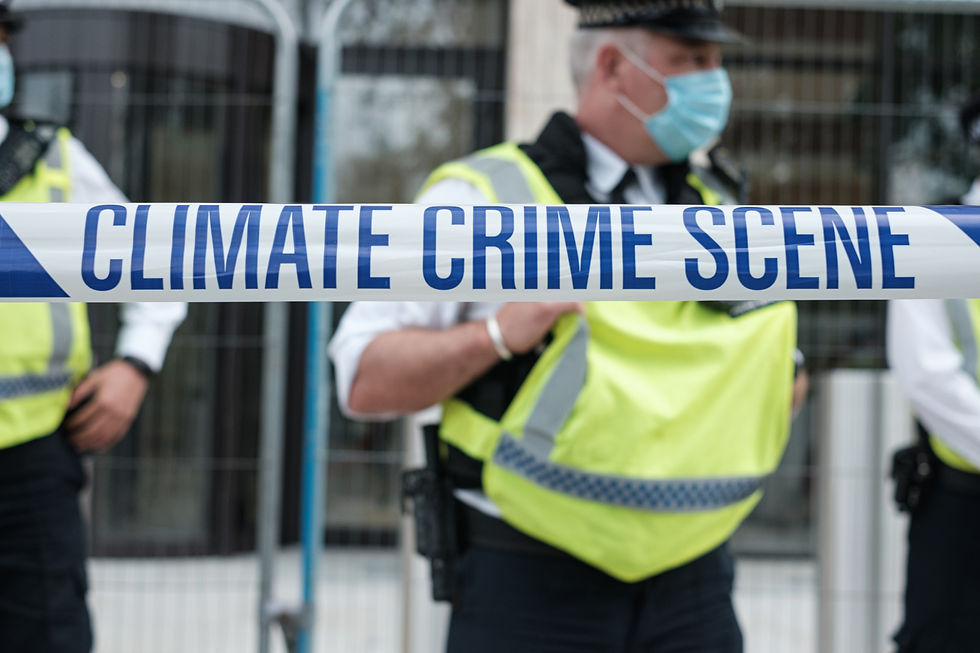
So, why do Extinction Rebellion use arrest as a tool?
Leslie Stuart Tate, a retired teacher and one of the founding members of Hertfordshire XR explains: “Extinction Rebellion was born from the realisation that after 40 years we had been lobbying and going to conferences and still the carbon count was going up. Normal action through the system had failed.”
He continues: “The only thing that will move the system is peaceful, non-violent civil disobedience. The arrests are what made people take us seriously and wonder why we would put ourselves through that. It’s also a way of using legal resources and putting tremendous pressure on the government.”
Nigel Harvey, the Chief Executive of a recycling business and member of XR, adds: “I think it’s a valid criticism that we are white and middle class, but yet the method of civil disobedience and arrest is tried and tested and does actually work.”
Members of Extinction Rebellion see it as a responsibility to use their privilege-
For this reason, many such as Leslie, see arrest as, “a level of sacrifice” and feel as though they have a duty to the cause.
Sue, for example, tells me: “For those of us who have white privilege and therefore can be arrested without being treated so negatively, it should be our responsibility to do that, on behalf of those who can’t.”
Sue continues: “The thing is you don’t get the impact, the publicity, headlines and so on without the arrest, that’s the reality of it. Almost all the press coverage we get is based on arrests.”
For example, Sue says: “I was one of three people locally who took part in a rebellion. The other two people moved when the police asked them to but I decided I had to be arrested because it was the only way my action would get any coverage. I was proved right, nothing at all was printed about the other two, whereas my arrest was in loads of local newspapers.”
Sue highlights: “We need the arrests but the arrests are also putting people off.”

Despite their effectiveness, another problem with these arrests is their mental toll-
Leslie tells me: “People get angry and it’s very demoralising when you face this after a while.”
He adds: “There have been multiple attempts of vehicles trying to force their way through us. When we blocked a road at the pedestrian crossing a big guy aggressively lifted my wife out of the road.”
For this reason, Leslie says: “Although there are issues with the police, we also need them to protect us from violence.” Another obstacle making these actions harder for people of colour.
Graham Cox, a retired domestic appliance engineer, adds: “It’s a big sacrifice getting arrested, every time it has consequences on you."
So, what keeps the morale going?
“100 to 200 people knew about our Murdoch action but it never got leaked to the police. I cried tears of joy when I go to the cell, that after weeks of planning, we had achieved it. It’s a measure of how committed and dedicated people are to the cause. That action is probably one of the most famous XR actions there have been,” Graham says.
While Sue says: “Really what has sustained me with Extinction Rebellion is that it has given me hope. If I wasn’t active with XR I don’t know how I would cope, because I don’t know where I would get my hope from.”
“There’s no doubt that my whole commitment is intensified by being a grandmother. I have this dual response of being happy but also thinking what a world are they being born into,” Sue adds.
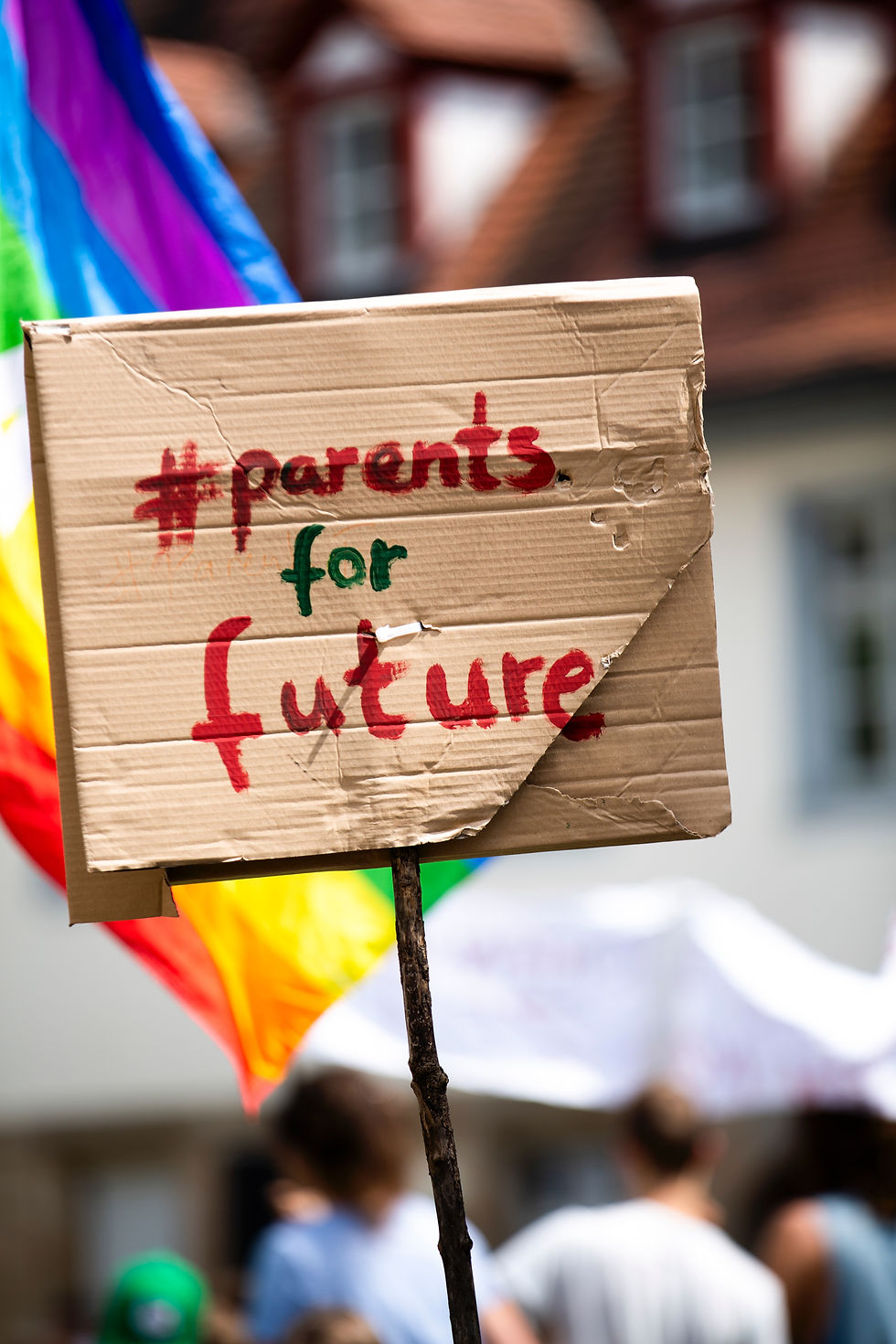
Though despite there being a large proportion of middle-class people in Extinction Rebellion, this mustn’t be generalised-
For example, Sue tells me: “Just by being able to be at rebellions, people are assuming you are lazy or don’t have anything better to do. You often get that from people who go past and tell you to get a job.”
“I do think it’s in the media’s interest to portray us a bit ‘hippyish' and superior. They like to make us out as not working people when of course people are working full-time. I know a single mother who feels like she’s letting her kids down by not being as available for them as she would like to be. But also feels she needs to take these actions for them,” Sue continues.
Zoë Nicole Skinner, a student and member of XR also points out: “The movement feels very white middle class at the moment, but it may feel that way because these are the people who have the most attention given to them. There are plenty of environmental activists that are people of colour,” she says.
Graham is someone who sees himself as an exception to the stereotype: “I don’t see myself as middle class, I’m a retired domestic appliance engineer who never went to University. There are XR working-class groups you can join; we have all sorts of people,” he says.
When asked how those on a lower-income deal with the arrest cost Graham explains: “If you’re on a very low income often the fines are quite low for arrest, just covering court costs, the judges are quite good. At court, you are entitled to a certain amount of free support and a lot of people in XR don’t earn much so can claim legal aid.”
Graham adds: “There was a whip round and few wealthy friends raised £150 for my £101 fine. You are responsible for your fines but people help you out.”

However, arrest isn’t the only part of Extinction Rebellion that people can be involved with-
Zoë says she thinks that: “there should be more emphasis on the different roles there are, other than civil disobedience in Extinction Rebellion”.
Nigel similarly tells me: “There are many ways you can get involved in XR. Only about 5% of us are arrestable so there are lots of other things that keep it going. We always need court support people, media people, art people and regenerative people.”
“There has been a huge amount of work put in by XR to connect with people who want to defund the police and can’t risk arrest. XR does take pains to try to include everyone and make sure people know there are lots of different roles,” Sue also suggests.
Wretched Earth's calls on XR to have a: "plurality and complexity of strategies". Their letter states that: "The strategy of XR, with the primary tactic being arrest, is a valid one – but it needs to be underlined by an ongoing analysis of privilege...XR participants should be able to use their privilege to risk arrest, whilst at the same time highlighting the racialised nature of policing."
If XR wants to broaden the conversation, they must listen to criticism and stand in solidarity with other groups.
Zoë points out the importance of this: "I’d really love to see people from a wide range of social groups feeling comfortable to be around each other fighting for one cause. Especially because when looking at the world, those who are going to be most severely impacted by future climate change are not white middle-class people at all," she says.
Ultimately, it undoubtedly seems that despite some efforts to broaden their appeal, Extinction Rebellion has a white-middle class majority and progress is necessary.
However, as Nigel points out: "Whether there is a disagreement with class or people, the subject is just too important to walk away from."
Read next:


Comments