Extinction Rebellion: extreme or necessary?
- Emily Latimer
- Jun 21, 2021
- 7 min read
Updated: Aug 2, 2021
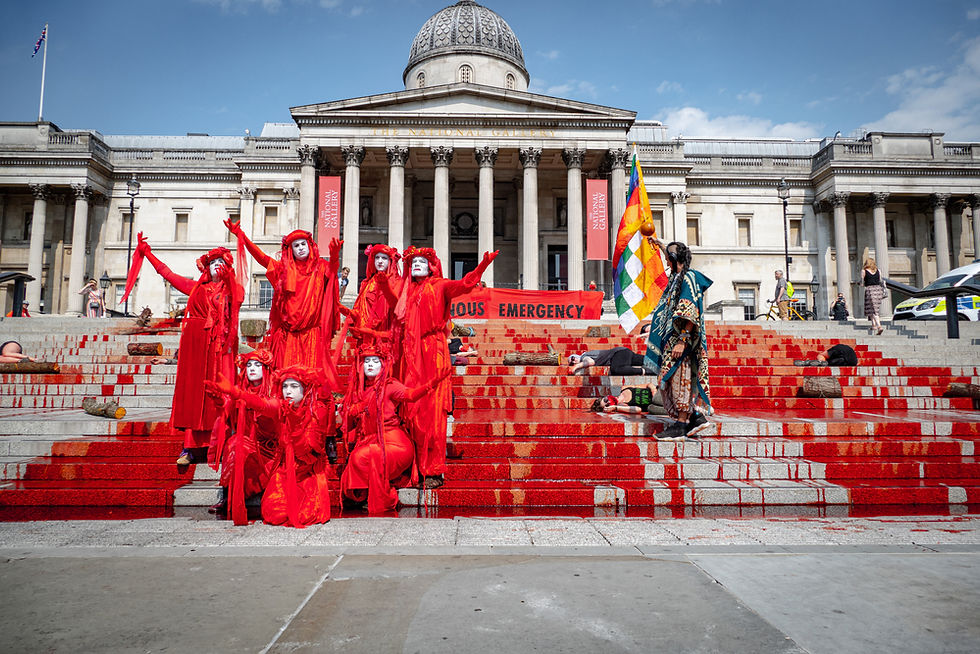
When you first think of Extinction Rebellion (XR) a few things might spring to mind: perhaps having your car blocked by protestors in the road or the infamous Canning Town protest in which two men climbed on top of an underground train during rush hour. For many, the words Extinction Rebellion inspire feelings of frustration due to their methods of public nuisance. But what are Extinction Rebellion really about, and why do they feel these actions are necessary?
Extinction Rebellion is the 70th most famous charity in the world according to YouGov, active in 75 countries and with 1000 groups across the globe. It is an environmental movement with the stated aim of using nonviolent civil disobedience to compel government action to avoid tipping points in the climate system, biodiversity loss, and the risk of social and ecological collapse.
The movement’s three UK aims are:
· The government must tell the truth by declaring a climate and ecological emergency, working with other institutions to communicate the urgency for change.
· The government must act now to halt biodiversity loss and reduce greenhouse gas emissions to net-zero by 2025.
· The government must create, and be led by the decisions of, a citizens' assembly on climate and ecological justice.
Extinction Rebellion was officially established in the United Kingdom in May 2018, with around one 100 academics signing a call to action in support in October 2018. At the end of that month, Extinction Rebellion was launched by Gail Bradbrook, Simon Bramwell and Roger Hallam, along with other activists from the campaign ‘Group Rising!’
In November 2018, five bridges across the River Thames in London were blockaded as a protest. In April 2019, Extinction Rebellion occupied five prominent sites in central London: Piccadilly Circus, Oxford Circus, Marble Arch, Waterloo Bridge and the area around Parliament Square.

How have the government and media responded?
Perhaps unsurprisingly, the UK Government have historically had a contentious relationship with Extinction Rebellion, with PM Boris Johnson describing them as: “left-wing anarchists” and Home Secretary Priti Patel labelling them: “eco-terrorists”.
Extinction Rebellion was also listed as a 'key threat' by counter-terrorism police on a list of extremist ideologies featuring alongside threats to national security such as neo-Nazi terrorism and a pro-terrorist Islamist group.
This disdain extends to the government’s Police, Crime, Sentencing and Courts Bill, which aims to toughen measures the police can use against protest and lists Extinction Rebellion as one of its main motivations.
The Bill states that the measures are needed because: “during Extinction Rebellion’s protests of April and October 2019, some of London’s busiest areas were brought to a standstill for several days. This had a disproportionate impact on commuters and small businesses.”
Whilst some of the media are praiseworthy of XR, others like the Telegraph share a negative view of Extinction Rebellion and warn: “police failure to come down hard on Extinction Rebellion will be a surrender to mob rule.”
So, with this all in mind, what is the public’s view of XR?
One YouGov poll found that whilst 71% of people have heard of Extinction Rebellion, 41% have a negative opinion of them.
A survey conducted by myself on 50 participants, found 30% of people see environmental activists like XR as hippies, 35% find them too extreme, whilst 26% feel they are misunderstood and 20% believe them to be necessary.

Barbara Mortimer, a 63-year-old Delivery Manager at a Civil and Family Courts Centre, despite being concerned about climate change, tells me why XR blocking the road and her local market made her feel frustrated.
“I felt angry because I am not sure they actually practice what they preach. Whilst I stopped using aerosol spray and carried reusable bags long before it was trendy, I have reused, recycled and shopped second hand most of my life,” she says.
Barbara adds: “Politicians are too busy making money to pay attention and the demonstrations only encourage laws against them. Instead, Extinction Rebellion needs to think more carefully about changing things like consumer behaviour.”
Grace Kennedy, a 50-year-old Finance Manager, agrees that whilst she cares about the environment, she finds Extinction Rebellion’s methods alienating as a law-abiding citizen.
She tells me: “I wouldn’t want a criminal record or to go through the process of being arrested and would ask XR to demonstrate that they have tried lawful demonstration or effective lobbying”.
This view is mirrored by others who see the disruption of ordinary people as counter-productive or divisive rather than solving the issue.

So, why do Extinction Rebellion feel their actions are necessary?
Christiana Figueres, the former U.N. climate chief, compares Extinction Rebellion's potential impact to that of groups like the suffragettes and the civil rights movement. “When you’re talking about a large systemic transformation, history shows us that civil disobedience is a very important component,” she says.
Extinction Rebellion’s efforts are aimed at building momentum. In an Oxford Forum video XR co-founder, Dr Gail Bradbrook states that: “Our theory of change is that mass participation in civil disobedience forces a government to act.”
Gail goes on to say that it: “builds on a tradition of civil disobedience” citing the suffragettes who broke windows, Mahatma Gandhi, The Salt Tax Revolt and the civil rights movement.
Gail also quotes Lord Hoffman from 2006 saying: “People who break the law to affirm their belief in the injustice of the law or government action are sometimes vindicated by history.”
Within weeks of Extinction Rebellion's first two-week mass mobilisation in London in April 2019, the U.K. parliament declared a climate emergency and the government announced a legally binding target for net-zero carbon emissions by 2050. XR was named the biggest influencer on the climate at the 2020 United Nations Climate Change Conference and made a huge impact in 2019 by revitalising the climate crisis within the public consciousness.
Kathy Childs, 23, a teaching assistant, agrees that whilst some of Extinction Rebellion’s methods are controversial, their methods are necessary.
Kathy says: “I have never personally been inconvenienced by them and I can imagine that if I needed to be somewhere and couldn’t get there I would be frustrated. However, without a healthy environment, we would be inconvenienced beyond measure, so really it’s a small sacrifice for a big message.”
This rhetoric is mirrored with the majority of Extinction Rebellion members who use science as justification for their actions.
Nigel Harvey, the owner of a recycling business and a member of XR says: “To those who say XR’s actions are a nuisance, I would say the consequences of climate change will be a far greater nuisance, and better to have a little disruption now that drives action then the horrendous disruption we will see in ten- or 20-years’ time.”
Nigel tells me he hadn’t realised the seriousness of the climate emergency and it was only when he realised the scale of it that he got involved.

This is unsurprising when you look at how concerning the Science is:
Despite this, according to the Climate Change Committee (CCC), the UK government fails to develop sufficient policies to meet the ambition of its climate goals; the UK has failed on 17 out of 21 progress indicators. It’s easy to see why Extinction Rebellion feels emergency action is needed.
Extinction Rebellion- a misunderstood movement?
Extinction Rebellion works through a de-centralised system where anyone can do things in the name of XR as long as they follow its ten core values such as having a shared vision of change and being non-violent.
This means a variety of events have taken place, from Free the Press a peaceful protest targeting the media, G7 protests urging world leaders to take action and protesting against Shell outside the oil company's London offices involving more than 1000 people.
Most of Extinction Rebellion’s protests are friendly and open, laden with artistic performances, talks and human connection.
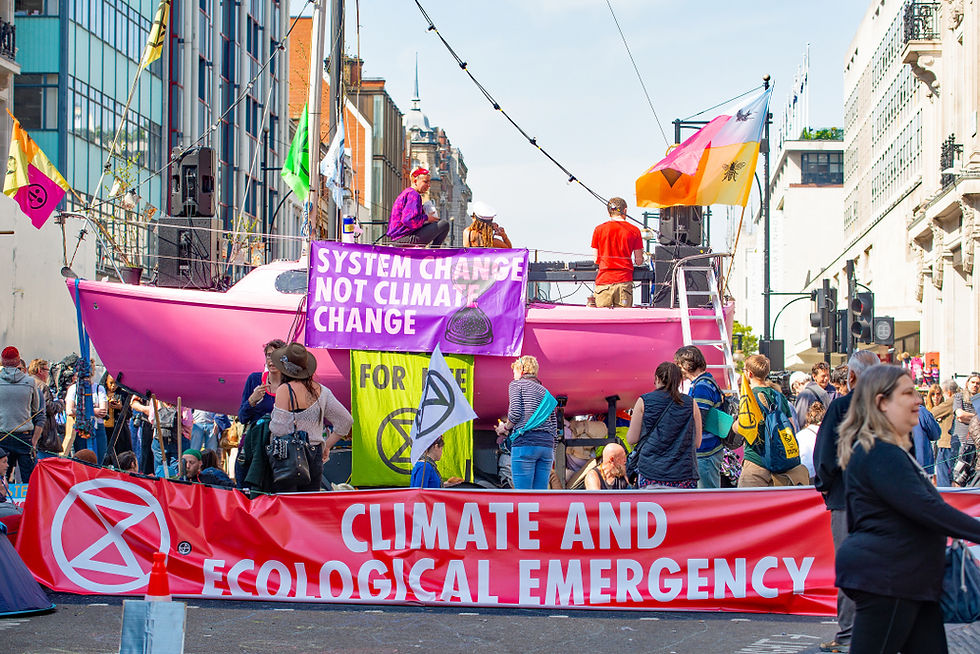
Extinction Rebellion justifies their de-centralised method on their website stating that: “The structure aims to empower anybody to act as part of XR, by seeking a balance between being able to act quickly in response to fast-changing situations and being able to integrate the collective wisdom of multiple perspectives when needed.”
However, there have been times this has led to controversial protests, most notably Canning Town, where XR was heavily criticised for targeting working-class commuters.
Supporters like Bronnie Mayho, an independent bookseller admits: “I think the XR message can be muddied when activism gets in the way of people doing their job like getting between home and work, like locking entrances to train stations. It is not helpful to an urgent, necessary cause.”
Despite XR describing the protest as ‘regrettable’ actions like these can leave a bad taste and turn the public against them.
Giselle Dors*, 23, a trainee teacher and a member of Extinction Rebellion, however, highlights that disruption can be a lesser evil and that actions like Canning Town do not represent the whole movement.
“We don't always get things right and sometimes certain members don't listen to the rest and do actions which are inappropriate like Canning Town. But ignoring those errors, XR's approach is the only way to generate radical change and that’s our only option if we want futures on this planet,” Giselle says.
“I think we are presented as people who don't have better things to do with our time or as radical tree huggers. But in reality, most of us work full time and it's a stretch to fit in activism! But we do it because we are educated about the dangers that we face and we care about our planet,” Giselle adds.
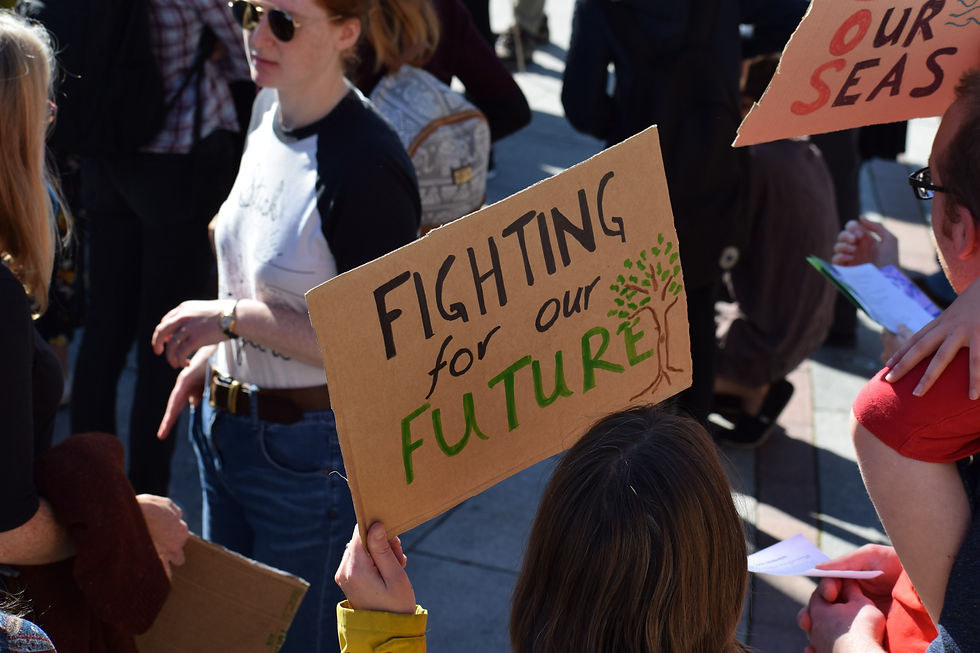
Sue Hampton, a retired primary school teacher, agrees that XR is often misrepresented. She says: "Empathy is very much built into XR. With any XR meeting, it begins with everybody speaking about where they are emotionally and psychologically. This is one thing I really think does not come across to the public, love is so embedded within the movement. That’s what we are motivated by the love of the earth and all its living beings including humanity. You can’t do anything more loving really than trying to protect life on Earth."
Sue adds: "However, you vote, whatever you think, we are doing this for everyone."
Ultimately, as with any movement, XR has made its mistakes. Though it seems that mostly Extinction Rebellion are just ordinary people, passionate about the environment and desperate to make the world listen.
*Name changed to protect anonymity
Read Next:


Comments