Fighting for the environment through art and music
- Emily Latimer
- Jun 21, 2021
- 4 min read
Updated: Aug 2, 2021

Environmental activism and art are not two things that people might often put together. But art is a huge part of many environmental movements including Extinction Rebellion (XR), which often doesn’t get the recognition it deserves.
From making placards and banners to writing or composing music, art can be an incredibly powerful tool.
Rich Lafford, a retired music teacher and member of XR, set up ‘change the world through music’ which enables people who are concerned about the climate emergency to perform at open mics.
Rich tells me: “I’ve not always found it easy being able to relate to being an activist. I feel happier playing music than I do in the streets around thousands of people and policemen.”
For Rich, music is a way of expressing his anxiety about the climate emergency: “When you read a lot about the environment it’s hard to think about how to make a change. But it’s important to remember that words and music have a power,” he says.
He continues: “Often the things that get noticed in Extinction Rebellion are the larger actions. But art can be incredibly compelling and can be remembered on a subliminal level or catch the attention of social media.”
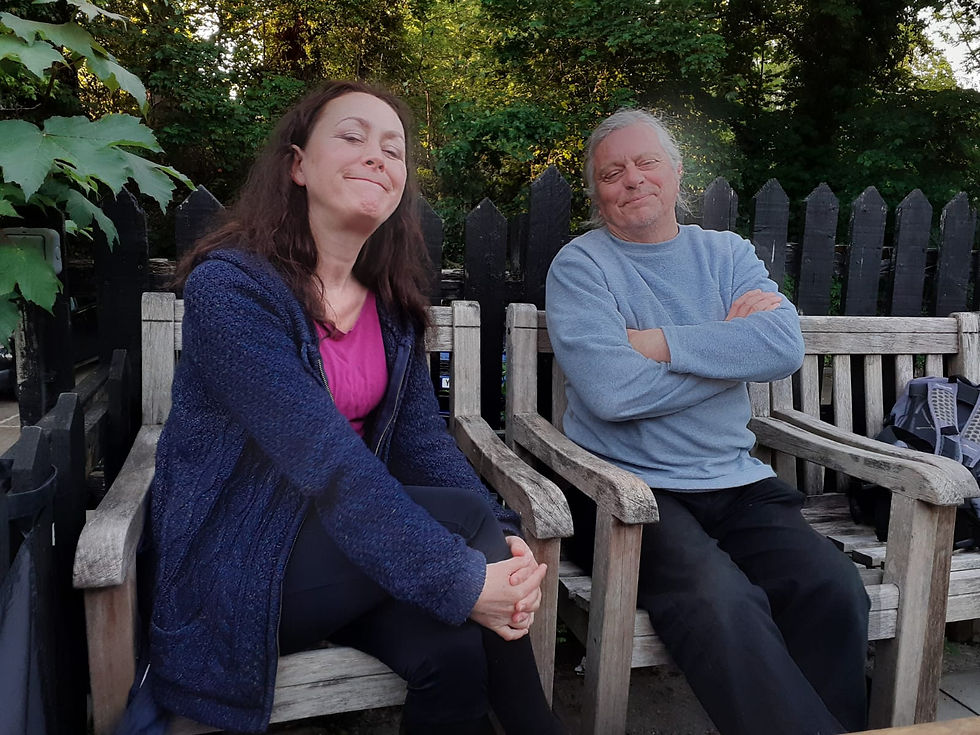
Credit: Emily Latimer
For example, he says Claire Miles, another member of XR, had her art captured by the Guardian and trending on Twitter.
Claire is a retired mental health nurse involved in lots of aspects of XR, including the arts group. Claire makes placards and banners themed around whatever action is coming up such as protests against HSBC and Barclays or the Police and Crime Sentencing Bill.
Claire sees her art as: “a call to the world to act with compassion,” and hopes for it to call out and expose abuses in the system.
“I’d want it to convey the deeper message and spark an emotion so that people can feel this is something that is about them too. We’re all in this, and some people are already suffering dire consequences,” Claire says about the climate emergency.

When asked what motivates her, Claire tells me: “It’s not something I can step out of anymore, it’s about life on Earth. I’m out of paid employment now and I feel like I need to do what I can to make it count for our children and those to come.”
Rich has a comparable motivation. He tells me: “As a parent of a 17-year-old, I don’t want to be in the situation in the future where I tell her that we are not going to save this planet and there won’t be a future anymore.”
Lola Perrin, a 59-year-old piano teacher, has a similar story of using art as a form of climate activism. She says: “When my children were very young, I kept occasionally hearing the words 'global warming' and it terrified me. But I put it to the back of my mind because I was a busy single parent and was afraid to engage. It was hard enough keeping my kids alive by getting them to cross the road safely without thinking about that kind of thing!”
But as her children got older, Lola found herself imagining the shapes and spaces within melting icebergs and from this forming the peaks and troughs of piano composition.

“I ended up with a piano suite I found very hard to finish. I was tormented for six months and it was the beginning of my difficult engagement with climate change,” Lola says.
Turning to photos on the climate, the imagery allowed her to finish the composition. But Lola explains that thinking about the climate got her “totally stuck” and gave her the realisation that she didn’t understand any of it.
Lola, therefore, decided to reach out to some climate scientists and used their words to make music. From this, Lola composed ‘Significantous’, a suite with a 40-minute silence in the middle where she planned there would be a talk about climate change followed by an open dialogue between the audience.
After breaking her leg and being immobile for two weeks, Lola contacted around 800 pianists with the concert idea she had now named ‘Climate Keys’ and received almost 100 responses.
Since then, Lola tells me: “We’ve had 70 concerts in 15 countries”.
“I did it to understand. I turned to the experts and bought them into my composition and my concert so that maybe the audience could understand as well,” Lola says.
She adds: “The idea of Climate Keys was to try and elevate it so that it got into the concert halls where the decision-makers take their kids on their free tickets.”
Since then, Lola has become a crucial member of Extinction Rebellion, helping to set up the arts and culture group. This is a place where people can bring ideas, that if the critical mass feels are good enough, the group will make happen.
For example, one idea Lola instigated called ‘playing piano for the planet’, involved putting a piano into a roadblock and having a six-hour classical concert on it.
“We ended up putting it in the first rebellion in Marble Arch with a peddle powered sound system, dressed as classical musicians looking to attract the establishment,” Lola says.
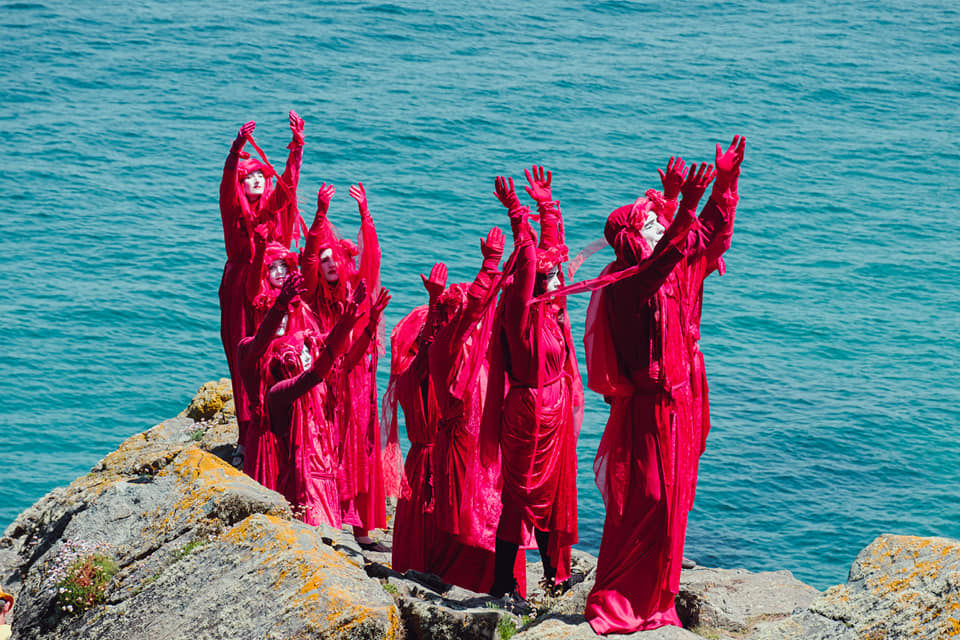
Lola highlights that whilst art is sometimes overlooked, it’s often what gains media attention within protests through noise or elaborate costumes.
Unlike, Rich and Claire whose art is empowering to them Lola instead tells me: “I write little music now because I find it traumatising. Engaging can be soul-destroying.”
But when asked what keeps her motivated Lola says:” We’re all just ordinary people trying to work out what we should be doing. I can’t just sit in a room and write music and play as if everything is okay. When it comes down to it, my kids won’t be able to say my mum knew and did nothing.”
Read next:


Comments